Meet Jasmina
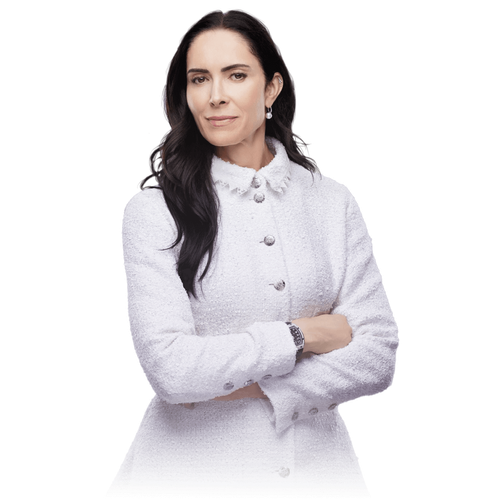
Scientist. Investor. Athlete. Architect of Longevity Intelligence.
Building a new model of human capability for longer lives in an age of intelligent machines.
Jasmina's work is guided by a simple but urgent question: How do humans adapt and evolve as life extends and complexity accelerates? She approaches health, technology, and human development as interdependent systems — each shaping how we think, decide, and live across time.
Trained as a scientist, Jasmina holds a Ph.D. in Chemical Engineering from Yale University, with a background in Biochemical Engineering and executive training in Sustainable Business Strategy from Harvard Business School. Her work spans academic research, fundraising, nonprofit leadership, and science-driven investment — all arenas where long-term thinking and systemic judgment shape real outcomes.
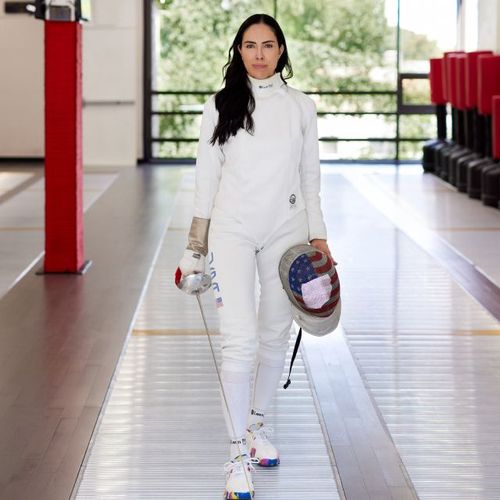
Her work moves fluidly across health, technology, education, entrepreneurship, and high-performance sport, applying systems thinking to real-world complexity. As a nationally ranked saber fencer, she trains the very capacities she writes about: precision under pressure, adaptive decision-making, and resilience over time.
Longevity, in her view, is no different. It is a long game that rewards training, feedback, and deliberate evolution. Longevity Intelligence is not just a framework she teaches. It is a system she lives.
A Conversation with Jasmina
An Intimate Chat on Science, Sports, Investing, and the Art of Transformation
If your career were a scientific experiment, what hypothesis are you testing?
I’m testing the hypothesis that life itself is a long game—that human health and potential depend on how well we train for it. By combining scientific rigor, long-term thinking, strategic investing, and competitive sport, I explore how people adapt, learn, perform, and evolve over time—especially in the context of longer lives. Like any sport, you’re only as good as your last decision, your last practice, and your willingness to keep learning as conditions change.
How do you define longevity—and why does it need to be redefined today?
I define longevity not as how long we live, but how well we adapt across time. We’ve extended lifespan, but we haven’t trained for longer lives—biologically, cognitively, or socially. Living longer without the capacity to learn, recover, and evolve simply stretches fragility. In an age of accelerating technology, longevity is no longer just a biological outcome—it’s a human capability.
What is Longevity Intelligence—and how did the concept emerge from your work?
Longevity Intelligence emerged from a gap I kept seeing across science, investing, and lived experience: we’re extending life faster than we’re upgrading the capacity to navigate it. Longevity isn’t just a health or technology problem—it’s a human capability problem. Longevity Intelligence names the ability to think, decide, and adapt across longer, more complex lives. It’s not about life hacks; it’s about developing the capacities that allow us to evolve with time rather than be overwhelmed by it.
How do you make decisions when the systems are complex, the signals are incomplete, and the consequences unfold over time?
When systems are complex and signals are incomplete, I slow things down before I speed them up. More data doesn’t automatically create clarity. I ask what really matters, what I’m assuming, and which decisions remain adjustable. I favor paths that allow learning and course correction over time. Good decisions aren’t about certainty upfront—they’re about staying adaptable as conditions change.
How do you make decisions when the systems are complex, the signals are incomplete, and the consequences unfold over time?
When systems are complex and signals are incomplete, I slow things down before I speed them up. More data doesn’t automatically create clarity. I ask what really matters, what I’m assuming, and which decisions remain adjustable. I favor paths that allow learning and course correction over time. Good decisions aren’t about certainty upfront—they’re about staying adaptable as conditions change.
How have science, investing, and sport shaped the way you think?
Science taught me to respect evidence and uncertainty. Investing taught me to think in probabilities and long time horizons. Sport trained me to decide under pressure, when feedback is immediate and information incomplete. What connects all three is learning through action — testing, adjusting, and carrying insight across domains. That cross-pollination sharpened my ability to recognize patterns and stay adaptable.
If longevity were an investment portfolio, how would you diversify it?
I wouldn't build longevity around chasing the next intervention — resilience comes first. That said, I'm not against optimization. I’d start with resilience: healthspan fundamentals, adaptability, strong social ties, and purpose. From there, tools and interventions add leverage when built on those foundations. In a long life, the real risk isn’t volatility—it’s fragility. Optimization works best when grounded in resilience.
What do you believe the future of health and technology requires from humans—not just from innovation?
The future of health technology requires humans to evolve alongside it, not outsource responsibility to it. Tools can extend capacity, but they can’t replace judgment or agency. As technology accelerates, we must update how we think and decide across longer lives. Otherwise, innovation amplifies dependency rather than capability.
What do you believe the future of health and technology requires from humans—not just from innovation?
The future of health technology requires humans to evolve alongside it, not outsource responsibility to it. Tools can extend capacity, but they can’t replace judgment or agency. As technology accelerates, we must update how we think and decide across longer lives. Otherwise, innovation amplifies dependency rather than capability.
How has competitive fencing influenced your professional journey?
Fencing taught me that you don’t train for perfect conditions—you train for disruption and recovery. Every bout demands presence and adaptation under pressure. Healthspan matters, but health alone doesn’t prepare you for a long, complex life. What fencing trained was the ability to recalibrate—body under stress, identity under change, purpose under pressure. That’s where Longevity Intelligence lives for me: not in optimization, but in practiced recovery and return.
What lesson about decision-making or agency has repeated itself most consistently in your life?
The lesson that repeats is to decide with my future self in mind—and to notice the patterns that keep appearing. When a choice aligns with who I’m becoming, the signal is clear. Ignoring those patterns usually means correcting course later. Recognizing them helps me filter noise and act with intention over time.
If you could change one thing about how we approach longevity, what would it be?
I would shift longevity from something we try to extend to something we learn how to live. Today, it’s treated as a medical or technological problem. But longevity is a design challenge. It asks how we build the capacities to adapt and stay engaged across longer lives. If we approached it as a trainable human skill rather than a passive outcome, we’d stop chasing fixes and start building futures we know how to inhabit.
If you could change one thing about how we approach longevity, what would it be?
I would shift longevity from something we try to extend to something we learn how to live. Today, it’s treated as a medical or technological problem. But longevity is a design challenge. It asks how we build the capacities to adapt and stay engaged across longer lives. If we approached it as a trainable human skill rather than a passive outcome, we’d stop chasing fixes and start building futures we know how to inhabit.
Step Into the Future with Jasmina
Jasmina brings Longevity Intelligence™ into conversation—helping leaders, institutions, and audiences rethink how humans adapt, decide, and evolve across longer lives. Invite her to speak at your event, podcast, or forum.