Body Wellness & HealthLongevity Medicine & Biotech
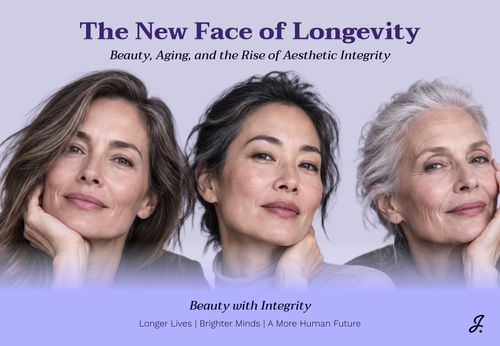
The New Face of Longevity: Beauty, Aging, and the Rise of Aesthetic Integrity
Rethinking beauty, aging, and aesthetic choices in the longevity era.
February 1, 2025
Share:
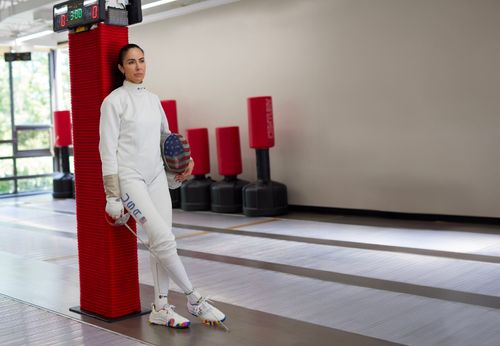
As a competitive fencer, I’m always searching for ways to elevate my performance while preserving my long-term health. I plan on fencing for a long time—not just as a sport, but as a way of life. And recently, I’ve had a powerful realization: more isn’t always better.
In a culture that constantly chases more — more strength, more stamina, more productivity—what we often end up with is less of what actually sustains us: less joy, less energy, less clarity. Overtraining, over-scheduling, over-extending… it all leads to what we’re trying to avoid: pain, tension, and burnout.
The deeper I go into my training, the more I return to a timeless truth: balance is everything.
Ancient wisdom and modern science alike remind us of the power in balancing yang and yin, action and rest. In fencing, as in life, knowing when to push and when to pause can make the difference between resilience and breakdown.
This isn’t just about sport—it’s about mindset. When life throws me a curveball, I no longer try to muscle my way through. Instead, I ask: “How can I meet this moment with more ease?”
Sometimes, the answer lies in doing less:
• Less tension = greater mobility
• Less stress = deeper relaxation
• Less control = more flow
And maybe the most radical shift of all? Love yourself more, fix yourself less.
What began as a reflection on balance in my fencing routine has unfolded into something much bigger: the realization that balance is the golden thread connecting every part of life. In a world that worships productivity, we’re all starving for something softer: tenderness, empathy, love. What’s the point of progress if it disconnects us from ourselves and each other?
True strength isn’t about having an iron grip. It’s about knowing when to loosen it.
Let go a little, and suddenly new possibilities emerge—ones that were hidden by the sheer force of striving.
Now I find myself carrying this mindset into everything: fencing, business, relationships, even the way I recover and rest. I’m not just chasing high performance anymore. I’m designing a life that sustains it.
This mindset aligns beautifully with the Longevity Intelligence framework I’ve been developing—a holistic approach to thriving in a world where extended lifespans and exponential technologies are reshaping what it means to live well.
In Longevity Intelligence:
• We optimize the biological by embracing rhythms of activity and rest, not just relentless output.
• We navigate the digital world with discernment, choosing connection over distraction.
• We build social and emotional resilience through compassion, community, and purpose—not just competition.
As a scientist, athlete, and entrepreneur, I stand at the intersection of health, technology, and human potential. And I believe the future isn’t about doing more—it’s about doing what matters most, with balance, curiosity, and intention.
So how about you?
How do you strike the balance between go-getter and go-with-the-flow?
Where in your life can you invite in a little less—to make space for so much more?
Rethinking beauty, aging, and aesthetic choices in the longevity era.
Why You’re Not Done Becoming—Even If You Think You Are We’ve all felt it: “This is who I am now. I’ve figured myself out.” It feels stable, satisfying… final. But psychology tells us something else: That’s an illusion. A powerful one. And it has a name.
A silent collapse is unfolding inside America’s universities—and it’s not just an academic trend. It’s a wake-up call. According to The Atlantic (June 2025), computer science enrollments are falling by 20–25% at several top institutions. After years of explosive growth, the CS boom is slowing fast. Why? Because AI is writing the code now.
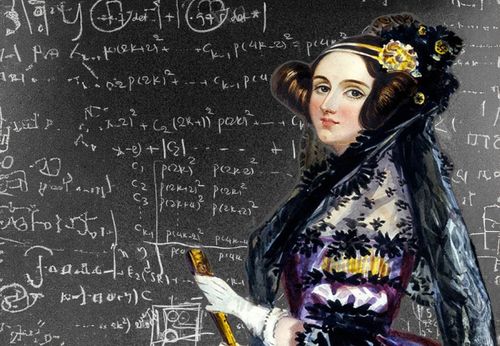
“That brain of mine is something more than merely mortal, as time will show.” — Ada Byron, Lady Lovelace Centuries before artificial intelligence, before personalized medicine, before the words “data scientist” meant anything at all—Ada Lovelace imagined a world no one else could see.
Digital Health Demands a New Kind of Intelligence In an era where AI can personalize your meal plan, influencers recommend daily biohacks, and longevity advice spreads at the speed of a swipe, one thing has never been more urgent: your ability to think clearly and skeptically.
How Blockchain + AI Will Revolutionize Longevity—and Put Your Health Data Back in Your Hands Let’s start with the fear: You’ve lived a life, tracked your steps, logged your meals, taken your meds, uploaded your labs—and now your data is working against you. Your insurance rates rise. Your coverage is questioned. Your personal history—deeply human and deeply contextual—is treated like a pricing algorithm.